Book Review: The Pursuit of Love
Nancy Mitford’s dazzling confection won me over, earning a perfect five stars.
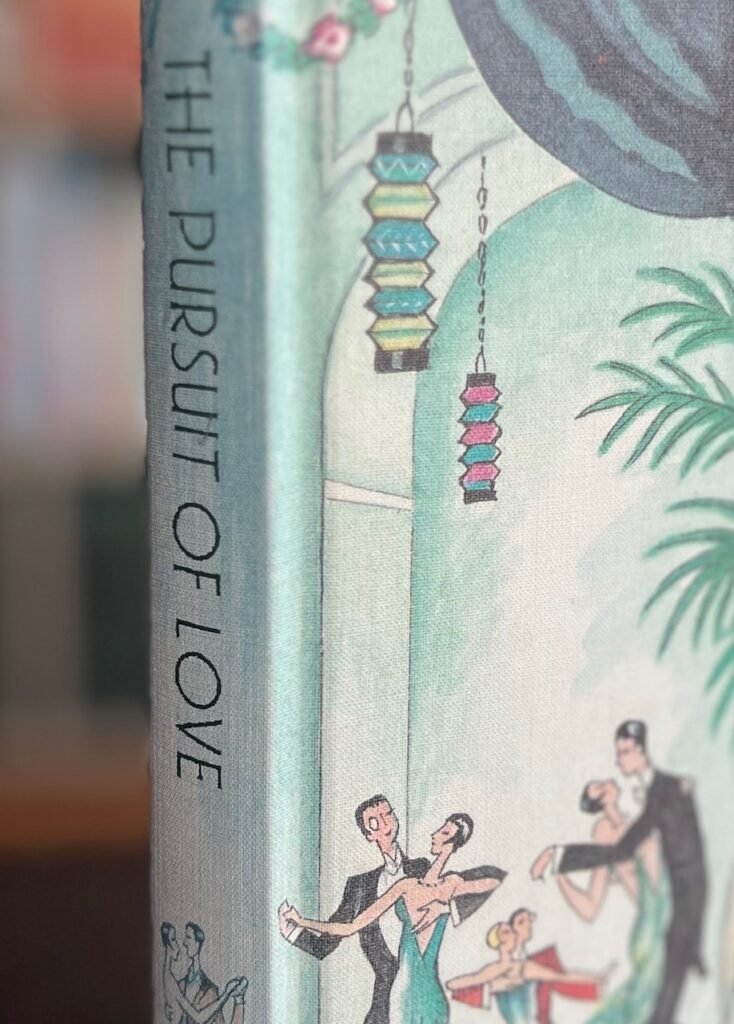
Don’t get the Penguin Edition unless you have
a microscope for the print.
I don’t ever want to re-read The Pursuit of Love. I’m scared of breaking the magic spell it cast over me first time round.
Often, falling madly in love with a book comes down to serendipitous timing: we encounter a particular work at the precise moment when we’re most susceptible to its charms. That definitely happened to me ten years ago when I read Love in a Cold Climate and The Pursuit of Love. The events in my own emotional life meant that I was ripe for them.
It would be a shame to go back and discover that I no longer see those books as the works of genius I’d imagined. Best to leave them alone.
At any rate, here’s the review as I wrote it in 2016.
An inauspicious start
The Pursuit of Love was Nancy Mitford’s first successful novel. It begins with a portrait of English country life in the inter-war years, personified by the aristocratic Radlett family. The novel then focuses on socialite Linda Radlett’s life and pursuit of true love.
When I started The Pursuit of Love, I cordially disliked it. For me, the subject matter was not promising. Coming out parties. Family life. Engagements. Beautiful dresses. Weddings. The social whirl. None of this could be further from my own experience or interest. Mitford’s effortless prose kept me from getting bored, but it really wasn’t my cup of tea.
Then there were the sharp and unforgiving divisions between the haves and have-nots. That’s not a monetary distinction: in the Mitford universe, the poor scarcely exist. Rather, it’s a distinction between those who possess vivacity, charm and beauty – or least sex appeal – and those unfortunate dullards who don’t.
So, for example, Lavender Davis is a ‘very dull girl…with very dull parents,’ Miss Marjorie is an ‘intensely dreary girl’ who ‘seemed to have ‘no biological reason for existing’. More broadly, idealists come under fire for the twin sins of throwing dull parties and caring for anyone physically unappealing:
‘[For Linda]…wider love, for the poor, the sad, and the unattractive, had no appeal for her.’
And again,
‘Christian always assumed that people were all right unless they told him to the contrary, when, except in the case of destitute, coloured, oppressed, leprous, or otherwise unattractive strangers, he would take absolutely no notice.’
And OK, I get that this is satire. Yet I couldn’t shake the feeling that in Nancy Mitford’s view, virtue really did inhere in being entertaining and preferably physically gorgeous. Even dressed up in her light, self-mocking tones, there seemed an underlying cattiness to the narration – and I didn’t much care for it.
All about the craft
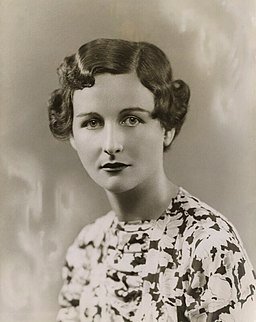
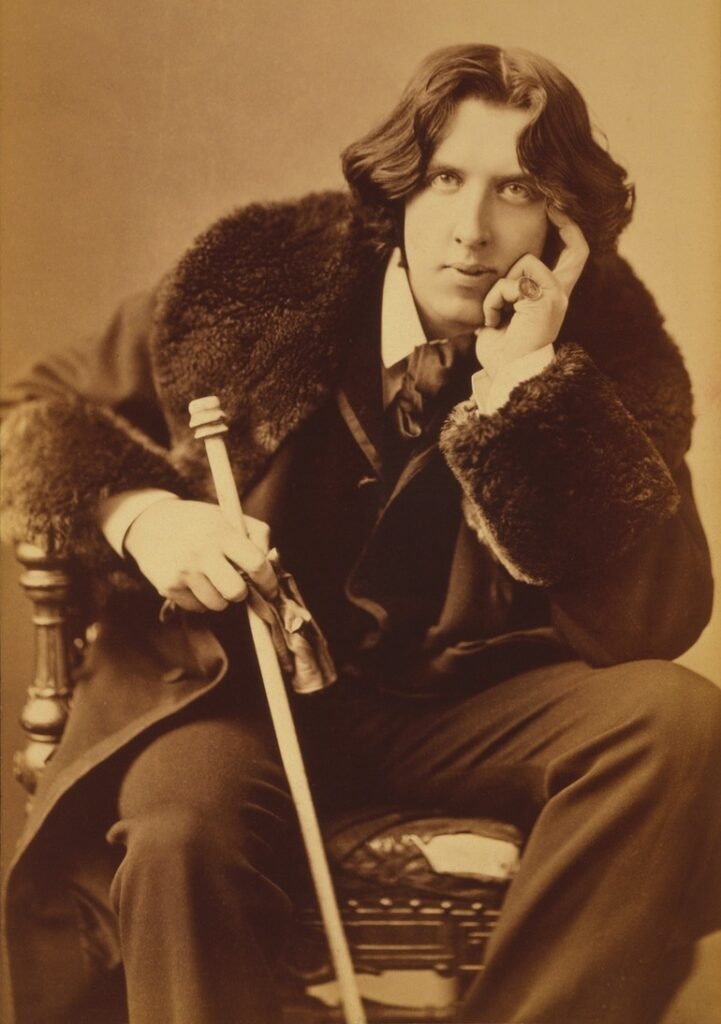
me to mock her creosoted
patrician head.
Unidentified photographer
for Bassano Ltd,
Public domain,
via Wikimedia Commons
Yet, by the middle of the book, Nancy was starting to win me over. I couldn’t help admiring a writer so fully in charge of her craft. There’s so much to marvel at. Her deceptively light prose style. How she captures the psychic landscape of the inter-war generation, destined, in the words of one of her characters, to be a historical curiosity. The wonderful cadences of the Mitford dialogue. Her dotty characters, drawn in broad but deft strokes. And the glee with which she spears intellectual pretension.
But cleverness aside, what really started to grab me were two themes – idealism and fortitude – together with the foregrounding of Linda Radlett. I’ll take these in turn.
The pursuit of idealism
.
Seeing her younger sisters captured by ideology – one might say radicalised – it’s not surprising that Nancy’s political views were distinctly wishy-washy.
A constant theme in The Pursuit of Love is that abstract ideals matter less than the feelings of individuals. Nancy’s idealists are blinded to the people right under their noses by the whirlwind of their own righteous rhetoric. She shows how martyrs to the cause are, on a domestic scale, both wearing to be around and thuddingly insensitive. As I lived with one for a few years, I can confirm that this is accurate.
Nancy’s take on this must surely have been influenced by her own family experiences. Two sisters (Unity and Diana) were ardent fascists, and another (Jessica) was a committed communist. Family lunchtimes must have been a blast. Seeing her younger sisters captured by ideology – one might say radicalised – it’s not surprising that Nancy’s political views were distinctly wishy-washy.
The Pursuit of Love tells us that ideals must always come second to the people we love. This raises an open question, which I ask without prejudice: if that principle were universally applied, what sort of world would we live in?
Tragedy and Fortitude
Scratch beneath the surface of this fluffy little romantic comedy, and a rattle bag of human tragedies come to light: loss, disappointment, disillusionment, ennui, heartbreak. These aren’t always easy to spot, because they tend to be mentioned in passing. The Pursuit of Love is a supremely unsentimental book, which isn’t the same as an unfeeling one. I can imagine one of Nancy’s characters saying something like, “Of course, it hurts one terribly darling, but it doesn’t do to dwell on these things.”
So, at one level, one could see The Pursuit of Love as a kind of paean to fortitude. One thing I found strangely touching was the reaction of Nancy’s cast to the probability of German invasion. She lends these laughable twits a kind of steel and dignity, as they matter-of-factly discuss their suicide pills and blowing up the pantry. You sense that, when the chips are down, they will be gay and gracious and frivolous to the end. Anything else would be too, too boring.
Linda Radlett
If I was to meet a real-life equivalent to Linda Radlett, I’ve no doubt that she would treat me like the wretched prole that I am. This does not stop me having a huge literary crush on her.
I can see why other readers might not warm to her. In particular, many will find Linda’s rejection of her child beyond the pale. But in this and all other matters, Linda is what Linda is. She is selfish and superficial and snobby, but crucially, she is never to be apologised for. Mitford refuses to explain or excuse or judge Linda, and in those refusals, she grants her tremendous agency and strength.
Perhaps Linda is a bitch, but if so, she’s a magnificent one, meeting life’s vicissitudes with a (mostly) superhuman poise. And in her own way, she is on her own holy quest. Because Linda believes in true love.
Now, about that…
On the nature of love
.
Most of us are like Fanny, content to be content, pleasantly plodding old labradors.
More than anything, what made this book such a memorable read for me was Mitford’s exploration of different types of love.
Fanny, the narrator, finds love through socially sanctioned channels: she loves her husband and children. By contrast, Linda cannot love her first child, nor her husbands, but will only find happiness with a lover.
Fanny seems content with her lot and would seem to have the better deal. And yet in a telling passage, Fanny talks of marriage as ‘the wholemeal bread of life, rough, ordinary but sustaining’ whereas Linda ‘had been feeding on honeydew, and that is an incomparable diet.’
So Mitford is telling us, I think, that we can only choose a love that accords with our nature. Doing anything else simply makes us miserable. Most of us are like Fanny, content to be content, pleasantly plodding old labradors. All solid bourgeois common sense, and no gambling – bad for the old ticker.
Ah, but every so often there’s a Linda: that wild, flame-eyed spirit who will risk everything for one brief moment of incandescent joy. The labradors look up for a while and wonder what it is like to love so ferociously. Then they go back to their plodding, and wag their tails gratefully now and again.
The Verdict
Hey, don’t neglect this classic.
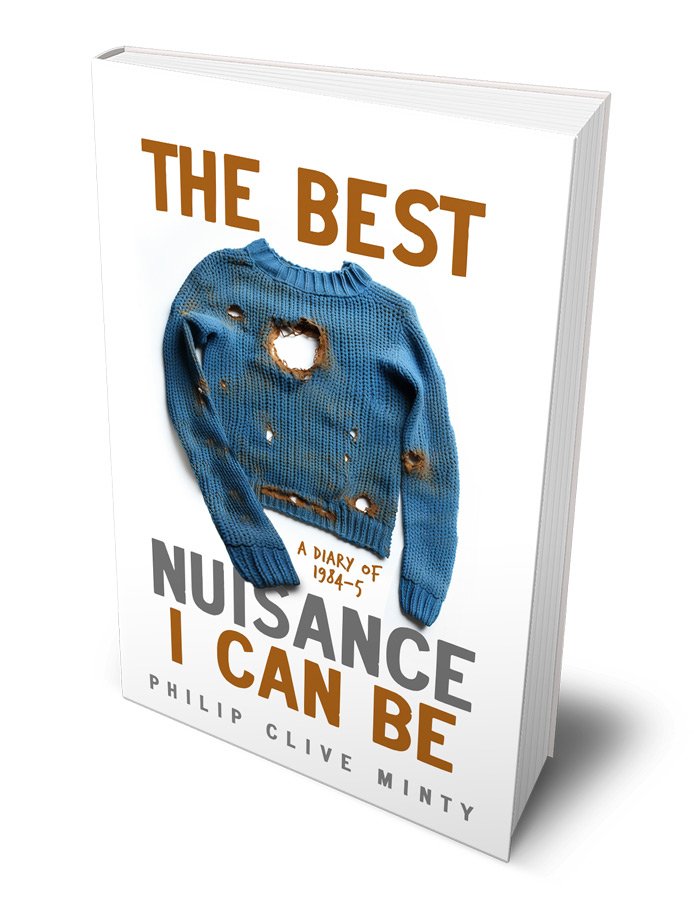
OK, calling it a classic might be a bit premature. But I reckon that my book is a pretty good read – for the right sort of person!
The Best Nuisance I Can Be is a novelisation of my real 1984-85 college diaries. It covers my tumultuous final year as an undergraduate at an English university, a period that delivered friendship, love, oodles of fun and some horrible self-discoveries.